For those of you who know me well, or have worked with me, you will know how deeply nature has shaped my personal journey of change.
Since setting up Root Beginnings, I have continuously drawn inspiration for my coaching tools and corporate programmes from time spent outdoors.
For me, the allotment has become a classroom. There is an abundance to learn as plants move through the seasons—how they grow, rest, regenerate, and respond to the conditions around them.
Nature has given me permission to live with the seasons in a way I had never consciously observed before.
For over a decade, I experienced the year almost exclusively through “quarters,” shaped by economic cycles rather than natural ones. I had never considered the seasons as a way of living or as a way of making decisions.
Through slower, more intentional observation, I began to notice how deeply the seasons influence our energy. When we listen to the feedback from our bodies, rather than blindly moving through the year as we always have, we discover that we have far more to work with.
This insight has since become the foundation of what I now call the Life Garden — a practical decision-making framework that helps individuals and teams allocate energy, attention, and effort more sustainably, particularly in fast-paced environments.
As the new year emerged, I found myself with a stack of exciting projects; ideas that had become possible because of the fertile ground I had been cultivating last year. Seeds planted carefully in spring, nurtured through summer and autumn, shaped by experience and learning along the way. It felt deeply rewarding to see how the work of clarifying and sharing my unique skills was beginning to bear fruit.
That stack of projects represented possibility and eagerness but it also revealed something else. I was taking on too much.
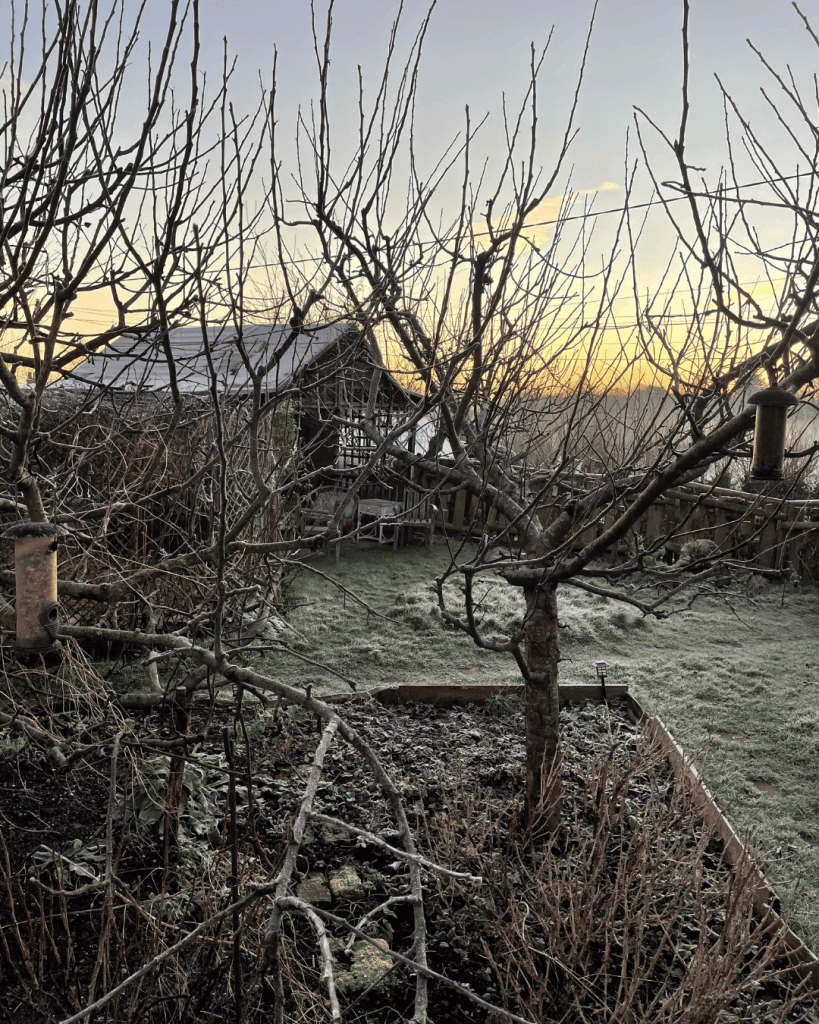
Standing in the allotment, looking at the bare winter beds, it became clear. This season is not about being in full bloom. It is about conserving energy, tending to what truly matters, and allowing the soil to rebuild.
Not everything needs to grow at once.
This moment captures how the Life Garden works in practice. In corporate environments, we often treat every quarter as a growth season. The Life Garden invites a different, more grounded question:
What season are we actually in?
For example:
- Winter — consolidation, learning, integration
- Spring — experimentation, ideation, pilots
- Summer — delivery, execution, momentum
- Autumn — evaluation, refinement, pulling together insights
“To pay attention, this is our endless and proper work.” ~ Mary Oliver, Yes! No!
When I realised I had exceeded my own capacity and chose to place some offerings on pause, what I felt was not loss, but liberation. The freedom that comes with letting go.
This can feel counter-intuitive, particularly at the start of a year when many cultures reward “more, more, more.” Yet the Life Garden reframes pausing not as disengagement, but as strategic maturity — preserving energy so that future growth is sustainable rather than forced.
Seeing our lives and work through the lens of a garden offers perspective in an extraordinarily fast-paced world. It invites gentleness where we often default to pressure, and replaces pushing through with tending to.
We do not need an allotment — or even a garden — to apply this way of thinking. What we need is imagination, and the willingness to pause long enough to listen.
Some simple reflections to begin working with your own Life Garden:
- How much energy do you have in this season of your life or work?
- What is most important to tend to right now?
- Are your current commitments nourishing that energy or depleting it?
When we learn to work with the seasons, rather than against them, decision-making becomes clearer and more sustainable.
Just like a garden, meaningful growth happens not through constant pressure, but through care, timing, and trust in the rhythm of change.